Cinsault & Carignan
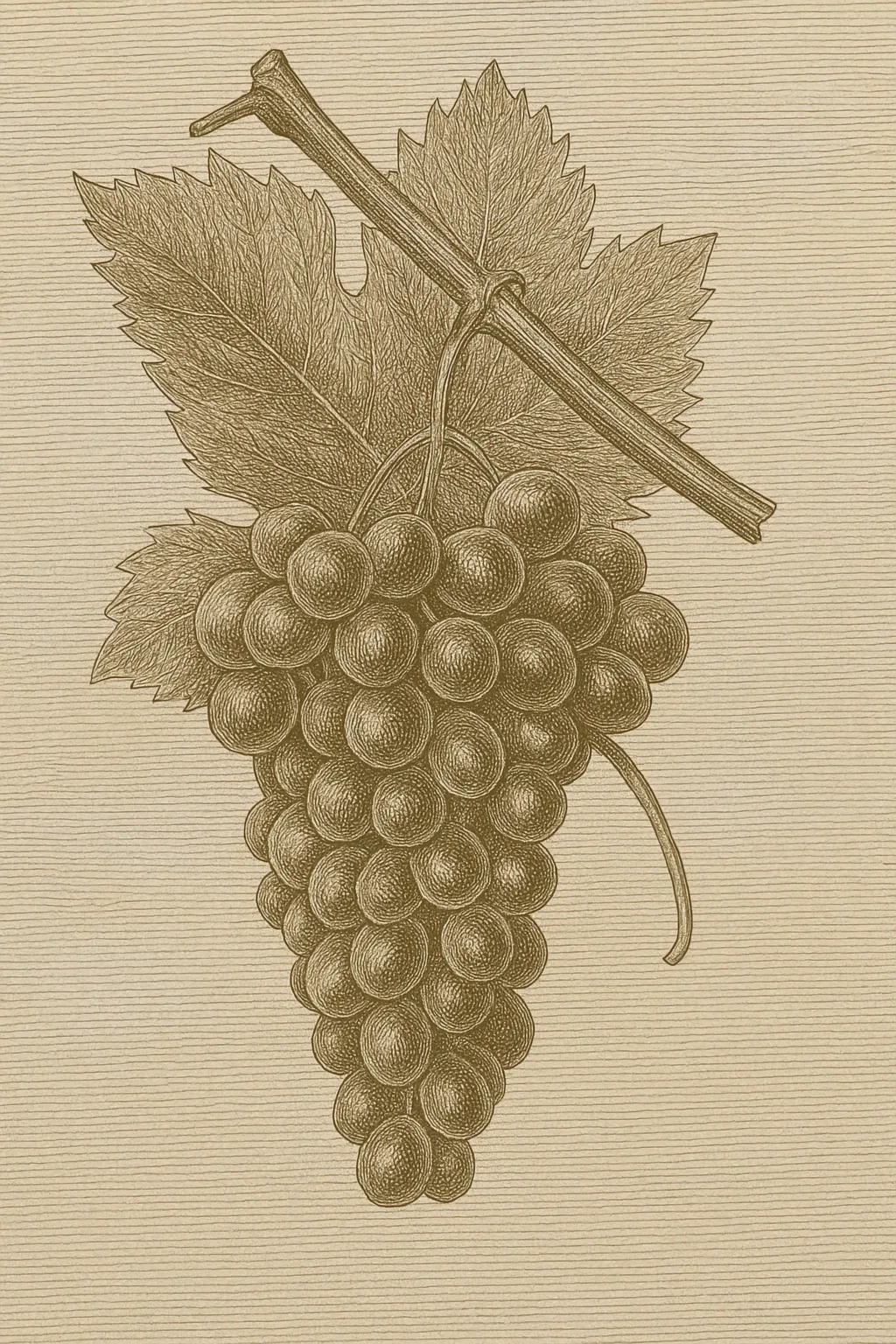
Cinsault
The Pinot Noir of the South
Cinsault is an old Mediterranean variety, grown in the South of France for centuries and already recorded in the 17th century. It spread through the Languedoc, Provence and the southern Rhône, valued for its hardiness, and was replanted widely after phylloxera for its yields and its ease on dry soils.
It fell from favour in the 20th century, but the 21st has rediscovered it: a grape for fresh, elegant wines, and a real asset as the climate warms. Its large, loose, thin-skinned bunches must be kept in check to give concentration.
Carignan
Old vines, hot summers, poor soils
Carignan came from Aragon in Spain, where it is called Cariñena, and has been part of the Midi for centuries. After phylloxera it rebuilt the vineyards of the Languedoc-Roussillon with its high yields, and long gave backbone to rustic red blends.
From the 1980s many high-yielding vines were pulled up, while some growers kept their old plots and began to treat them with new respect. On poor, dry slopes, bush-trained and pruned short, Carignan gives wines both sturdy and harmonious, able to age and true to their southern soil.
